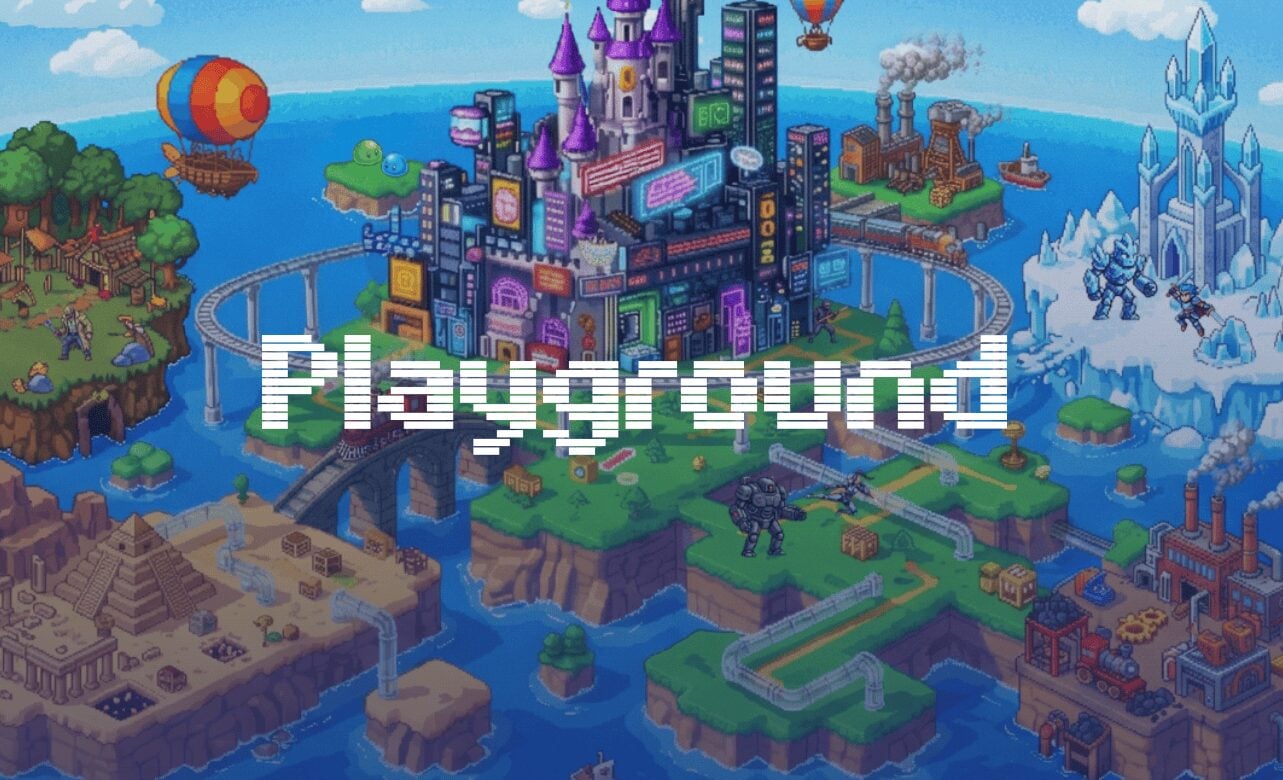
Google has opened up Playground, a browser-based tool that builds simple games from text prompts. Google Playground went live on October 7 in what the company calls an “experimental” phase. A more advanced 3D version, made with Unity, is due later this year.
The Google Playground pitch is simple. Users describe the game they want, and the platform generates a playable version. According to Google, players can “direct the game just by typing what you want to build,” then test the result offline or send it to friends through a link.
What Google Playground promises
Google frames the tool as a way to open game development to people without technical skills. No coding knowledge is needed to use it.
“Game creation has historically been limited to a very select group with technical experience,” the company said. “Playground lowers the barriers to creation, so bringing game ideas to life can now be as easy as describing it through a few prompts.”
For now, Google Playground handles fairly basic projects. The bigger ambitions sit with its Unity partner.
Unity Spark brings 3D games and store assets
The second product, Unity Spark, will also run in a browser. However, it will generate 3D games from text prompts and pull from the Unity Asset Store, so creations can use art made by the store’s community of artists.
In a blog post, Unity CEO Matt Bromberg said the tool is not about “one-shotting” a game or asking AI to “regurgitate an already invented game.”
“[That] does not make you the next Hideo Kojima, any more than re-typing the first paragraph of War and Peace in your word processor makes you Tolstoy,” he wrote. “Unity Spark is about being able to create real, unique interactive experiences.”
Bromberg said Unity built Spark for players who “have spent a thousand hours inside a genre and know exactly what’s missing.” He also named graphic artists who can’t code and modders who want to build something entirely new.
AI tools remain divisive in game development
Generative AI is still a sore point in the games industry. The technology draws complaints over plagiarism and over the quality of what it produces. Even so, many developers now use AI tools during production to cut costs and move faster.
The tension surfaced again this week. Jagex, the studio behind RuneScape, pulled a trailer after saying a partner had broken its anti-AI rule without its knowledge.
Unity has also felt market pressure from Google’s AI work. Its share price fell 20 percent last year after Google revealed its Genie 3 world generation model. Speaking to the Financial Times, Bromberg called the market reaction a “misunderstanding” of how AI would affect the $200 billion games industry.
“AI doesn’t replace software; it uses it,” he said.
Google Playground is available now in its experimental form. Neither company has named an exact launch date for Unity Spark beyond later this year.