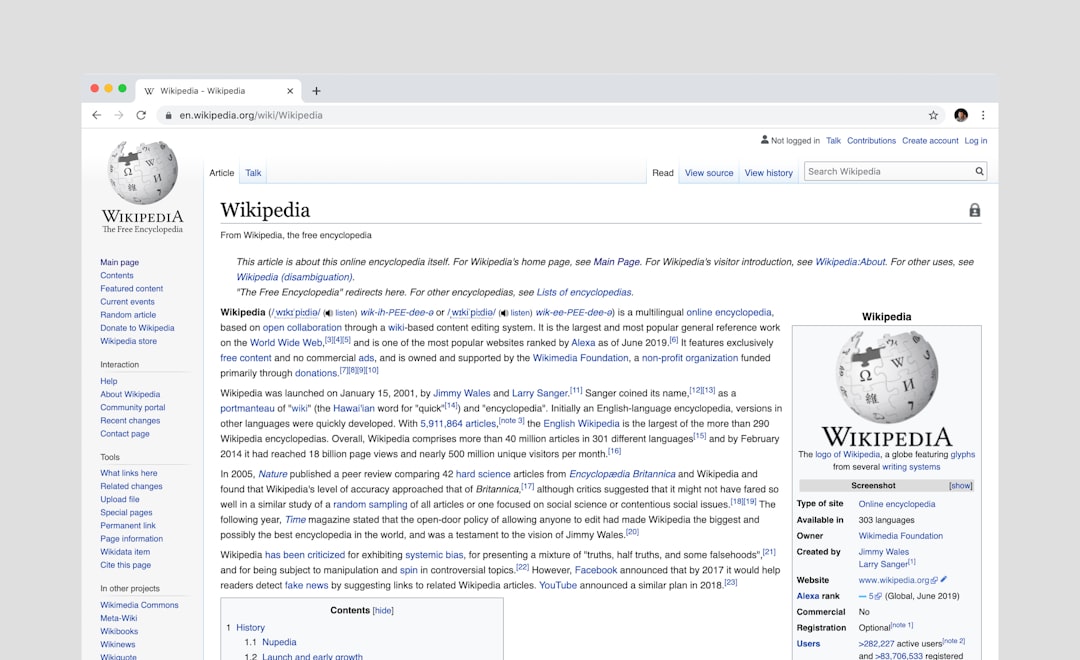
Wikipedia just slammed the door on AI-written articles. The English-language site now bans generative AI from drafting or rewriting any entries. The reason? AI copy “often violates several of Wikipedia’s core content policies,” according to the platform. Editors can still use large language models (LLMs) for minor tweaks or translation, but only if they double-check for accuracy and fluency. No shortcuts allowed.
Why this matters for editors and readers
For Wikipedia’s millions of users, this means less risk of stumbling into AI-generated nonsense or hallucinated facts. The site has always prided itself on human moderation and source-backed content. Generative AI, while fast, can “change the meaning of the text such that it is not supported by the sources cited.” That’s a dealbreaker for a platform built on verifiability.
Editors aren’t totally locked out of AI tools. They can use LLMs to polish their own writing or help with translations-if they’re fluent enough to catch errors. But every AI-assisted edit must be checked for accuracy. The loopholes are tiny, and the risks are clear: one bad AI rewrite could slip in misinformation or break Wikipedia’s sourcing rules.
Not all Wikipedias play by the same rules
Wikipedia isn’t a single monolith. Each language edition sets its own policies. The Spanish Wikipedia, for example, has gone even further and banned LLMs entirely-no exceptions for refinement or translation. Others might take a softer line, but the trend is clear: human oversight is king.
Spotting AI-generated text isn’t foolproof. Human moderators could miss some AI-written content, especially on less-watched pages. But the new policy sets a hard line: if you’re using AI, you’d better be ready to defend every word.
Pushback against “enshittification”
Wikipedia administrator Chaotic Enby called the move a “pushback against enshittification and the forceful push of AI by so many companies in these last few years.” The hope is that other online communities will follow suit and decide for themselves how much AI they want in their content. This isn’t just about Wikipedia-it’s about who controls what we read online.
The bottom line
- English Wikipedia bans AI-generated articles, with rare exceptions for human-checked tweaks and translations.
- Other language editions can set stricter or looser rules-Spanish Wikipedia bans LLMs entirely.
- Readers get more reliable, human-verified information. Editors face tighter restrictions on AI use.