NASA launched Artemis II on April 1, sending four astronauts on a 10-day journey around the Moon. But this mission isn’t just about crewed spaceflight-it’s a showcase of space tradition, symbolism, and some truly unusual cargo tucked inside the Orion spacecraft.
Why does it matter? Every item aboard tells a story about where spaceflight has been, where it’s headed, and how NASA aims to ignite public imagination for the next era of lunar exploration. Artemis II’s mementos aren’t mere souvenirs-they’re signals about NASA’s priorities, partnerships, and how it wants the world to view this mission.
Artifacts With a Mission: The Flight Kit Tradition
NASA’s official flight kit is a long-standing ritual. Federal law allows NASA, its partners, and international agencies to send small items into space for use as awards, gifts, or museum pieces. But every item requires written permission-no sneaking your favorite Funko Pop aboard.
Space was tight on Artemis II. The uncrewed Artemis I flight in 2022 carried about 120 pounds of “weird stuff.” This time, with four astronauts, a toilet, food, and life-support gear packed into a capsule the size of two minivans, the kit had to shrink. Still, NASA made room for a handful of symbolic and quirky objects.
History in Orbit: Apollo, Wright Brothers, and Moon Trees
Some of the most meaningful cargo is pure space nostalgia. Inside Orion is an American flag originally meant for the canceled Apollo 18 mission in the 1970s. NASA calls it “a powerful emblem of America’s renewed commitment to human exploration of the moon”-a literal thread linking Artemis to Apollo’s legacy.
There’s also a one-inch swatch of fabric from the Wright brothers’ Flyer, on loan from the Smithsonian. That same scrap has already flown on the Space Shuttle Discovery. It’s a nod to the journey from first flight to deep space.
And then there’s dirt-ten bags of it. Not just any dirt, but soil from trees grown from seeds that flew on Artemis I. After those seeds returned to Earth and sprouted, the soil was collected for this mission. It’s a full-circle moment: space to Earth, then back to space. This tradition began with Apollo 14’s “moon trees,” whose seeds accidentally mixed and became a symbol of space botany. This time, the Canadian Space Agency also sent seeds, continuing the tradition as Canadian astronaut Jeremy Hansen becomes the first non-American on a deep space flight.
Quirky Cargo: Plushies, Rocket Shavings, and Science Experiments
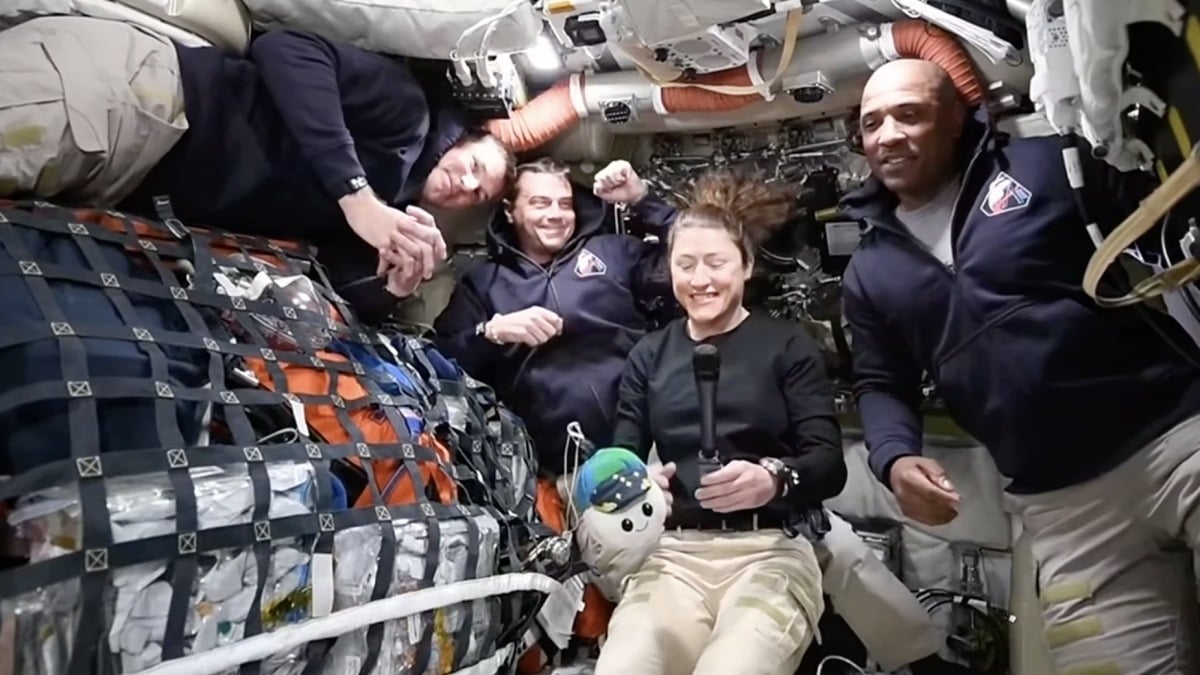
Not everything in the kit is historic. Some items are just plain fun or unusual. The zero-gravity indicator? A plushie designed by an eight-year-old. It floats around the cabin, signaling when the laws of physics have officially gone out the window.
There are also shavings from the Space Launch System’s core stage-tiny bits of aluminum from the rocket that launched Artemis II. It’s a meta move: pieces of the rocket riding inside the spacecraft it launched.
On the science front, Artemis II carries lab-grown astronaut tissue samples for a unique experiment called A Virtual Astronaut. The goal: study how deep space affects human biology without risking actual organs. This isn’t just for show-understanding how tissues respond to cosmic radiation and microgravity is crucial for future Moon and Mars missions.
International Partnerships and Symbolism
Artemis II isn’t just a U.S. show. With Jeremy Hansen aboard, Canada gets a front-row seat in deep space. The Canadian Space Agency’s contribution of seeds and symbolic items highlights the growing international flavor of lunar exploration. These partnerships matter: they shape who gains access to future missions, who sets the rules, and how the benefits of lunar science are shared.
Why the Weird Stuff Matters
It’s easy to dismiss these mementos as fluff, but they serve real purposes. They inspire the public, honor past achievements, and give astronauts a sense of connection to Earth. They’re also PR gold-each item sparks conversation, keeping Artemis II in headlines and classrooms long after splashdown.
For NASA, these artifacts are about legacy. They remind us that every mission stands on the shoulders of those before it-and that spaceflight is as much about culture as it is about science.
What to Watch Next: Artemis, Public Imagination, and the Race to the Moon
As Artemis II circles the Moon, the world watches-not just for technical success, but for signs that the public still cares about lunar exploration. The flight kit’s blend of history, science, and whimsy is NASA’s bet that people want more than rocket launches-they want stories, symbols, and a sense of connection.
The next big test: Artemis III, aiming to put boots on the lunar surface. Expect even more symbolic cargo-and higher stakes for NASA’s effort to keep the Moon in the public imagination.