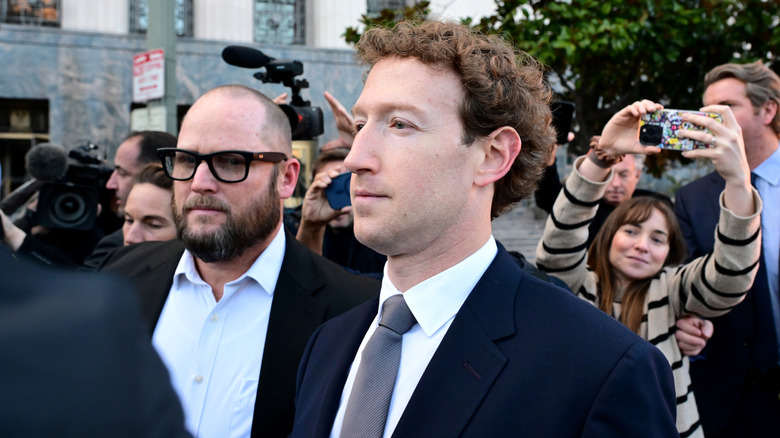
The Meta social media addiction trial that opened Tuesday in federal court in Oakland, California, could produce the largest penalty the company has ever faced. States involved in the case are seeking damages as high as $1.4 trillion. They accuse Meta of building addictive features into Instagram and Facebook and misleading the public about the risks to teenagers.
The trial stems from a 2023 lawsuit filed by dozens of states. It followed a multi-state investigation into Meta’s safety practices. Officials said that investigation turned up serious harms to children and teens using the company’s platforms. Meta tried to get the case dismissed last week and lost, clearing the way for opening arguments to begin as scheduled on Tuesday, August 18.
What the states are alleging in the Meta social media addiction trial
Federal judge Yvonne Gonzalez Rogers is hearing claims from California, Colorado, Kentucky and New Jersey. Those states argue Meta violated state consumer protection laws by intentionally misleading the public about the safety of its apps. The same four states, along with 25 others, are separately suing Meta over alleged violations of the Children’s Online Privacy Protection Act, known as COPPA. The states argue Meta knew Instagram and Facebook had users under 13. It collected data on them anyway, without parental permission, according to the lawsuit.
None of the four lead states has said publicly how much it plans to seek in damages. Meta disclosed the figure itself, in a court filing ahead of the trial. The company said the states were seeking penalties as high as $1.4 trillion, a number it called “outlandish.” Judge Rogers has reportedly pushed back on that figure too. She told the court it seemed unreasonable, according to remarks reported by Law360. But she also questioned Meta’s own counteroffer of roughly $4 million, suggesting that number was too low as well.
Meta’s defense against the addiction claims
Meta maintains that the states have not proven their case. The company argues the proposed penalties do not match the alleged harm. “The State AGs may call this a landmark case, but their limited claims are unsubstantiated and their financial demands are vastly disproportionate,” a Meta spokesperson said in a statement provided to Engadget.
The spokesperson argued that some of the conduct at issue is routine. “The AGs offer no proof anyone in their states was misled, claim benign features like having an additional Instagram account somehow harmed their residents, and attempt to penalize Meta for industry-wide challenges like age verification,” the statement continued. Meta says it intends to contest the claims at trial rather than settle. The company argues the states have built their case around demands, not evidence, and that a courtroom fight is the only way to test that gap.
Zuckerberg and Mosseri could testify
The trial may include testimony from some of Meta’s most prominent executives. CEO Mark Zuckerberg and Instagram chief Adam Mosseri are both likely to take the stand, according to Reuters. Both have appeared as witnesses in other trials this year that addressed similar allegations. During testimony in a Los Angeles trial in February, Zuckerberg said Instagram is designed to be useful, not addictive.
An eight-member jury has already been selected, but its role in this case is unusual. Unlike a standard jury, the panel will serve only in an advisory capacity, Law360 reports. Judge Rogers retains full authority over the final verdict and any penalties. The jury’s findings function as a recommendation, not a binding decision, which leaves the ultimate outcome in the judge’s hands regardless of what the panel concludes.
Why this trial carries extra weight for Meta
Meta is already facing thousands of other lawsuits over alleged harm to users. This case lands after two recent losses elsewhere. Juries in Los Angeles and New Mexico have both ruled against the company in trials covering similar ground, and Meta has said it will appeal both verdicts. A third loss in Oakland would carry its own financial cost. It could also make the path easier for the remaining lawsuits still working through the courts. Plaintiffs in other states are watching closely to see how judges and juries treat the same underlying evidence.
The legal exposure is already showing up in Meta’s spending. The company reported $2.4 billion in legal costs for the second quarter of 2026 alone. That figure is tied largely to the wave of litigation over user safety. Meta is not short on resources to fight these cases. Still, the scale of the claims keeps growing, and the frequency with which they arrive has turned litigation into a recurring cost of doing business rather than an occasional distraction.
Other states have taken notice of how these trials unfold. Attorneys general in states not yet party to a lawsuit have cited the Los Angeles and New Mexico verdicts when discussing potential action of their own. A large penalty in Oakland would likely accelerate that trend. Even an amount well below the $1.4 trillion states are seeking would give more attorneys general a template for building cases against the company, based on the same COPPA and consumer protection theories at the center of this trial.
The COPPA claims add a separate layer of risk beyond the state consumer protection allegations. Federal law allows regulators to seek penalties per violation when a company knowingly collects data from children under 13 without parental consent, and with millions of young users across Instagram and Facebook, plaintiffs’ attorneys have argued the math scales quickly. Meta disputes that framing and says its age verification systems meet legal requirements, even as it acknowledges the broader industry has struggled to keep underage users off platforms built for a general audience.
The trial is expected to run for about six weeks. Audio will stream live on the court’s YouTube channel, giving the public direct access to testimony as it happens. A verdict, whenever it lands, will be read against a backdrop of prior rulings that have not gone Meta’s way. It will also be measured against a penalty figure that even the presiding judge has already called too high, and a counteroffer from Meta that she has called too low.