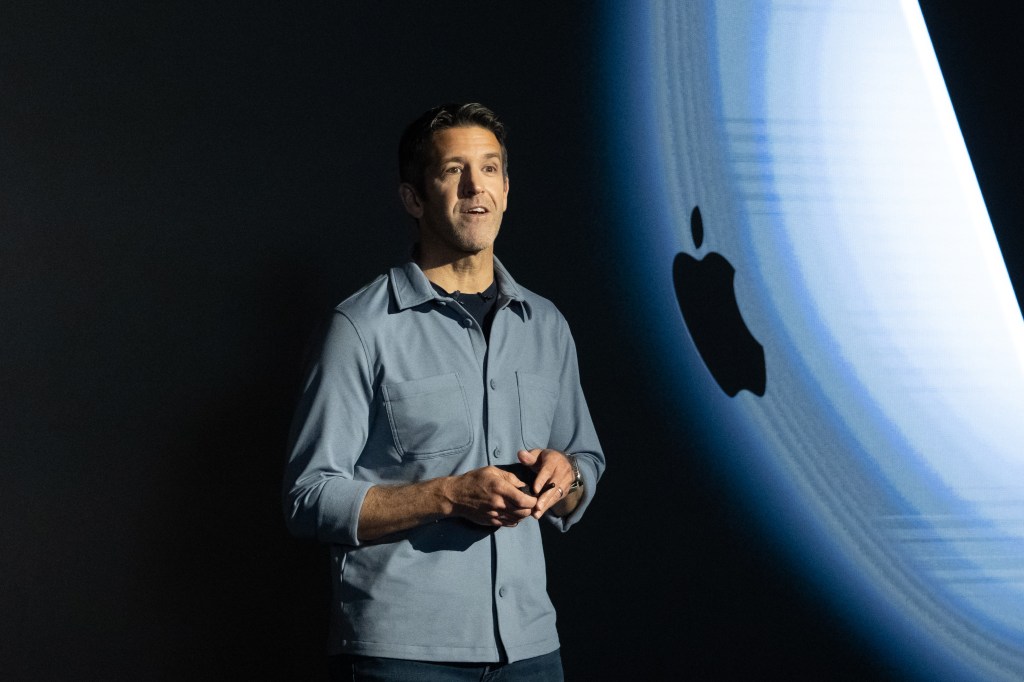
John Ternus became Apple‘s chief executive on Tuesday, taking over from Tim Cook after a 15-year run at the top. Ternus spent 25 years climbing Apple’s engineering ranks before the company named him CEO. Most people outside the Apple press corps had never heard his name until he was announced as Cook’s successor in April.
The timing puts him straight into the deep end. Apple holds its iPhone launch event next week. The company is also preparing to roll out a rebuilt version of Siri that runs on Google’s Gemini models. Cook, who stays on as executive chairman, told staff in a note on his final day that he felt no hesitation about the handoff. “I take enormous comfort in handing the helm to someone as brilliant and wonderful and capable as John,” Cook wrote. “Few people understand what it takes to build products that change the world the way John does.”
Apple has changed leadership only once before this century. Cook became CEO himself in 2011, after Steve Jobs stepped down for health reasons. He then ran the company for 15 years before naming a successor of his own. Cook staying on as executive chairman gives Ternus a transition period, rather than a clean break from the executive who built much of Apple’s modern operation.
A 25-year career at Apple
Ternus is 51 years old and has spent nearly half his life at Apple. He joined the company’s product design team in 2001, his second job out of college. His first job was at a small virtual-reality hardware maker called Virtual Research Systems. By 2013 he had risen to vice president of hardware engineering, and Apple promoted him to senior vice president in 2021.
He is 15 years younger than Cook and was among the youngest executives on Apple’s list of possible successors. That suggests the company wanted someone who could stay in the role for a long stretch. Apple has had only two CEOs since 2000, and the pattern points to a board that values continuity over frequent turnover. Ternus reported directly to Cook for years and has described him as a mentor.
Ternus offered a glimpse of how he thinks about leadership during a 2024 commencement address at the University of Pennsylvania’s engineering school, his alma mater. “Always assume you’re as smart as anyone else in the room, but never assume that you know as much as they do,” he told graduates. “With this mindset, you’ll find the confidence you need to push forward, but more importantly, the humility to ask questions.”
The hardware John Ternus built
Ternus’s first Apple assignment involved inspecting parts for the Apple Cinema Display, an early desktop monitor. In the same commencement speech, he recalled spending a night at a supplier’s factory counting the grooves on a screw head with a magnifying glass. A batch had 35 grooves instead of the required 25. He said the moment made him question whether the obsession with detail was normal. He decided it was simply how Apple worked.
That attention followed him as his responsibilities grew. Ternus went on to lead hardware development across AirPods, the Apple Watch, and the Vision Pro. He also had a direct hand in Apple’s multi-year shift from Intel processors to its own Apple silicon chips. Asked about his favorite memory of Steve Jobs, Ternus once described watching Jobs pull a chest of drawers away from a wall to inspect the unfinished back. Jobs was impressed that the carpenter had finished it as carefully as the visible front.
His most recent project was the MacBook Neo, Apple’s cheaper laptop that cuts costs by borrowing an iPhone chip instead of a full Mac processor. “We never want to ship junk. We want to ship great products that have that Apple experience, that Apple quality,” Ternus told Tom’s Guide about the Neo’s development. “To do that required building something completely new from the ground up.”
What the new Apple CEO inherits
The job comes with an immediate list of open problems. Apple is racing to catch up in generative AI after Siri’s redesign slipped behind rivals. The company is leaning on an outside partner, Google, to power the assistant’s new version with Gemini rather than Apple’s own models. That arrangement puts Ternus in the position of running Apple’s AI strategy through a competitor’s technology, at least for now. Google and Microsoft have both pushed their own assistants further into daily use over the past two years, and Apple’s Siri rebuild is an attempt to close that gap rather than lead it.
Apple also still has to decide what to do with the technology underneath the Vision Pro. The headset has not found the mainstream audience the company hoped for since its 2024 launch. Ternus oversaw the Vision Pro’s hardware development himself. That puts him in an unusual position. As CEO, he will now decide whether to keep investing in a product he helped build as an engineer, scale it back, or fold its technology into other devices.
Next week’s iPhone event adds more immediate pressure. It will be the first major hardware launch where Ternus appears as chief executive, rather than as the engineer running point behind the scenes. It sets an early tone for how Apple frames leadership continuity to customers and investors during the handoff.
John Ternus’s life outside of Apple
Ternus swam competitively at Penn. His senior engineering project was a robotic feeding arm that people with quadriplegia could operate using head movements. Public political donation records show he gave $2,900 to Senator Chuck Schumer of New York in 2021. Beyond that, he has kept a low public profile for someone about to run a company Apple’s size, and only recently joined the social platform X.
That reticence will be harder to maintain now. Apple’s new CEO takes the stage next week for the iPhone launch. The choices John Ternus makes on AI and on the Vision Pro will be measured against one thing: the 25 years of engineering work that got him the job.