Last verified: April 2026. Sales figures and review scores may change as new data becomes available.
Crimson Desert is an open-world action-adventure RPG developed by Pearl Abyss, the South Korean studio behind Black Desert Online. Released on March 19, 2026, for PS5, Xbox Series X/S, Windows, and macOS, the game sold 2 million copies within its first 16 hours and 3 million within its first week. It is a single-player game with no multiplayer component, priced at $70 across all platforms. Here is a complete breakdown of the game’s story, gameplay, critical reception, and sales performance.
What is Crimson Desert
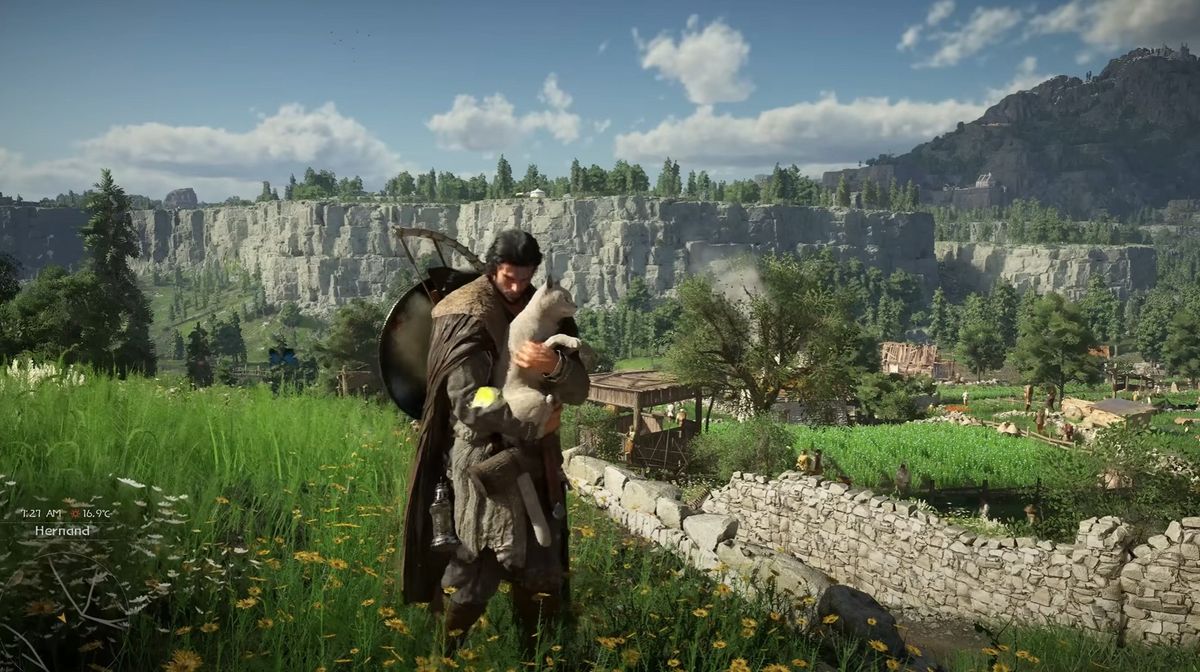
Crimson Desert is an open-world action-adventure RPG set on the fictional continent of Pywel. Players control Kliff, a mercenary working to rebuild a faction called the Greymane. The game blends third-person melee combat with exploration across a large open world that includes deserts, snow-covered plains, cities, ancient ruins, and an underground region called the Abyss.
Pearl Abyss built Crimson Desert on a proprietary game engine. The engine powers dynamic weather systems, a full day-night cycle, and physics-based interactions with the environment. Despite sharing a developer and some thematic DNA with Black Desert Online, Crimson Desert is a standalone single-player experience. It is not a sequel to Black Desert, and it does not include any online multiplayer or MMO elements.
The game launched at a premium $70 price point, matching the standard pricing for major new releases on current-generation consoles. It is available on Steam, the PlayStation Store, the Microsoft Store, and the Mac App Store.
Crimson Desert gameplay
Combat is the core of the gameplay loop. Crimson Desert uses a real-time action combat system with light attacks, heavy attacks, dodging, parrying, and special abilities tied to Kliff’s progression. Multiple weapon types are available, and players can switch between fighting styles as they unlock new skills. The combat system has drawn comparisons to both Dark Souls and Dragon’s Dogma, though it has its own rhythm and mechanics.
Exploration is open-ended. The continent of Pywel is traversable on foot, by mount, or through fast travel points unlocked by progressing through the story. Environmental variety is a notable strength. Moving from sun-baked deserts to frozen highlands to dense forests and underground caverns creates a sense of scale that rewards players who venture off the main path.
The narrative follows Kliff’s efforts to unite the Greymane and navigate the political conflicts of Pywel. Side quests and optional storylines flesh out the world’s factions, history, and characters. The game does not use procedural generation for its quests. Each side story is hand-crafted, though the open-world structure means players can encounter them in different orders.
Crimson Desert critical reception
Crimson Desert received a polarized critical response. On Metacritic, the game holds a critic average score of 77 out of 100, with individual review scores ranging from 4.5 out of 10 to a perfect 10 out of 10. The user score sits at 8.8 based on over 10,000 ratings, indicating a more positive reception from players than from critics.
Combat was the most consistently praised element across reviews. Critics highlighted the weight and responsiveness of melee encounters, the variety of enemy types, and the challenge of boss fights. The open world’s visual quality and environmental diversity also received positive attention.
The most common criticisms focused on controls. Several reviewers described movement and camera handling as clunky, particularly during platforming sections and tight indoor environments. Some critics also noted pacing issues in the middle act of the main story, where the narrative slows between major set pieces. According to NotebookCheck, these control issues were cited as the primary factor preventing the game from reaching higher review scores and potential game-of-the-year consideration.
Despite the mixed critical consensus, the strong user score suggests that players who connected with the combat and world design were willing to overlook the control rough edges. This kind of critic-player split is not uncommon for ambitious open-world games that prioritize scope and systems over polish in every area.
Crimson Desert sales performance
Crimson Desert posted strong sales numbers out of the gate. According to Outlook Respawn, the game sold 2 million copies across all platforms within its first 16 hours of availability. By the end of its first week, that number reached 3 million copies sold.
On Steam specifically, Crimson Desert peaked at 248,530 concurrent players on March 22, 2026, three days after launch. That made it the third-largest Steam launch of 2026 at the time, behind Slay the Spire 2 and Resident Evil Requiem.
At $70 per copy, the first-week sales figure of 3 million units represents approximately $210 million in gross revenue, though actual revenue depends on platform cuts, regional pricing differences, and any launch discounts. For Pearl Abyss, a studio previously known primarily for the free-to-play Black Desert Online, a premium $70 single-player game selling 3 million copies in seven days is a significant commercial result.
Pearl Abyss and the Black Desert connection
Pearl Abyss is a South Korean game developer founded in 2010. The company’s flagship product is Black Desert Online, a massively multiplayer online RPG known for its action combat system and character customization. Crimson Desert was originally announced as a game set in the same universe as Black Desert, but Pearl Abyss later repositioned it as a separate, standalone IP.
The two games share some visual and thematic similarities. Both feature detailed character models, large open worlds, and action-oriented combat. However, Crimson Desert is entirely single-player with a fixed protagonist and a structured narrative, while Black Desert Online is a live-service MMO with player-created characters, open PvP, and ongoing content updates.
The official Crimson Desert website from Pearl Abyss positions the game independently from the Black Desert brand. Players do not need any familiarity with Black Desert to understand or enjoy Crimson Desert.
Platforms and system requirements
Crimson Desert is available on PS5, Xbox Series X/S, Windows (via Steam and the Microsoft Store), and macOS. There is no PS4, Xbox One, or Nintendo Switch version. The game targets current-generation hardware only.
On PC, the game requires a relatively powerful system to run at high settings. Pearl Abyss’s proprietary engine pushes detailed environments, particle effects, and physics simulations that scale with hardware capability. Exact minimum and recommended specifications are listed on the Steam store page.
Frequently asked questions
Is Crimson Desert a sequel to Black Desert?
No. Crimson Desert is a standalone single-player game. While it shares a developer (Pearl Abyss) and some visual similarities with Black Desert Online, it is a separate IP with its own story, characters, and world. No prior knowledge of Black Desert is needed.
Does Crimson Desert have multiplayer?
No. Crimson Desert is a single-player-only game. There is no online multiplayer, co-op mode, or competitive element. The game focuses entirely on its single-player story and open-world exploration.
How long is Crimson Desert?
Completion times vary depending on play style. The main story takes approximately 30 to 40 hours based on early player reports. Completing side quests, exploring the full open world, and finishing optional content can push the total past 60 hours. These are community-reported estimates, not official figures from Pearl Abyss.
What platforms is Crimson Desert available on?
Crimson Desert launched on March 19, 2026, for PlayStation 5, Xbox Series X/S, Windows (Steam and Microsoft Store), and macOS. There is no last-generation console version and no Nintendo Switch version.