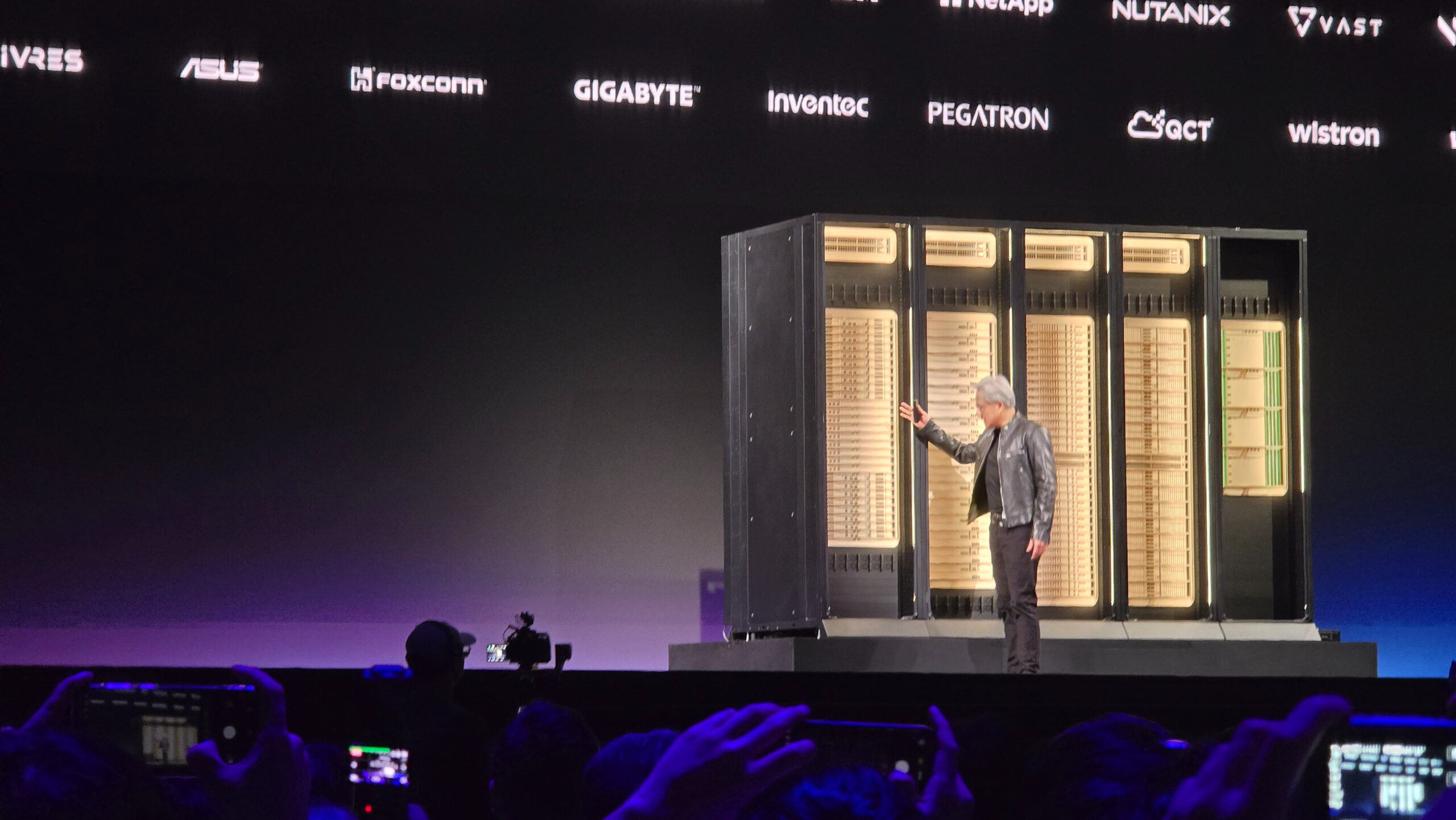
Nvidia‘s market cap shed nearly $330 billion in a single trading session on Friday, after chipmaker Broadcom issued an AI chip sales forecast that fell below Wall Street estimates. The sell-off spread across the semiconductor sector, with AMD, Micron, and Qualcomm each losing more than 9% on the day.
Nvidia fell 6% on Friday. The stock recovered 1.7% in Monday’s session but slipped again on Tuesday, and remained under pressure in pre-market trading as of Wednesday.
The decline came with no operational news from Nvidia. Nvidia’s market cap sits at roughly $5 trillion, making it the largest stock by that measure. Demand for its highest-end AI accelerators still stretches months to years on backorder. The trigger was entirely external.
Broadcom’s forecast came in below estimates
Broadcom’s earnings report showed solid overall results, with guidance broadly in line with forecasts. The problem was its forward projection for AI chip sales: $16 billion for Q3, against a Wall Street consensus of $17.2 billion. The $1.2 billion shortfall spooked investors already watching for signs of deceleration in AI infrastructure spending.
Broadcom itself lost 19% across two trading sessions. Nvidia’s 6% decline reflects how tightly semiconductor stocks have become linked to any signal about AI spending momentum, regardless of which company issues the guidance.
One alternative read: softer Broadcom guidance could benefit Nvidia. Broadcom designs custom AI chips for specific clients, while Nvidia sells standardized hardware at volume. If Broadcom is losing share in the AI chip market, some of that demand could shift toward Nvidia’s solutions. That logic did not appear to register with the market on Friday.
Macro conditions added further pressure
The sell-off deepened through the week on factors beyond Broadcom. A stronger-than-expected May 2026 jobs report eliminated near-term Federal Reserve rate cut expectations, with some traders beginning to price in the possibility of a hike. That environment reduces appetite for high-multiple growth stocks, a category Nvidia occupies firmly.
An upcoming Senate hearing on chip sales to China and the ongoing US-Iran conflict added further uncertainty. The combination of a sector-specific guidance miss and a tighter macro backdrop pushed the sell-off beyond what Broadcom’s numbers alone might have caused.
Nvidia market cap faces its next test in August
Nvidia reports annual earnings on August 26, 2026. Investor expectations remain high given the company’s history of consecutive earnings beats, but the Broadcom episode showed how quickly a single guidance number can reshape sentiment for the entire sector.
Capital rotation adds another variable. SpaceX, OpenAI, and Anthropic are all expected to come to market in the near term, pulling investor attention toward newer AI positions and potentially drawing funds away from existing chip stocks.
Nvidia’s position as the dominant supplier of AI training hardware has not changed. But the sustained pressure on Nvidia’s market cap this week suggests investors are beginning to weigh AI growth rates more carefully, rather than treating continued acceleration as a certainty.