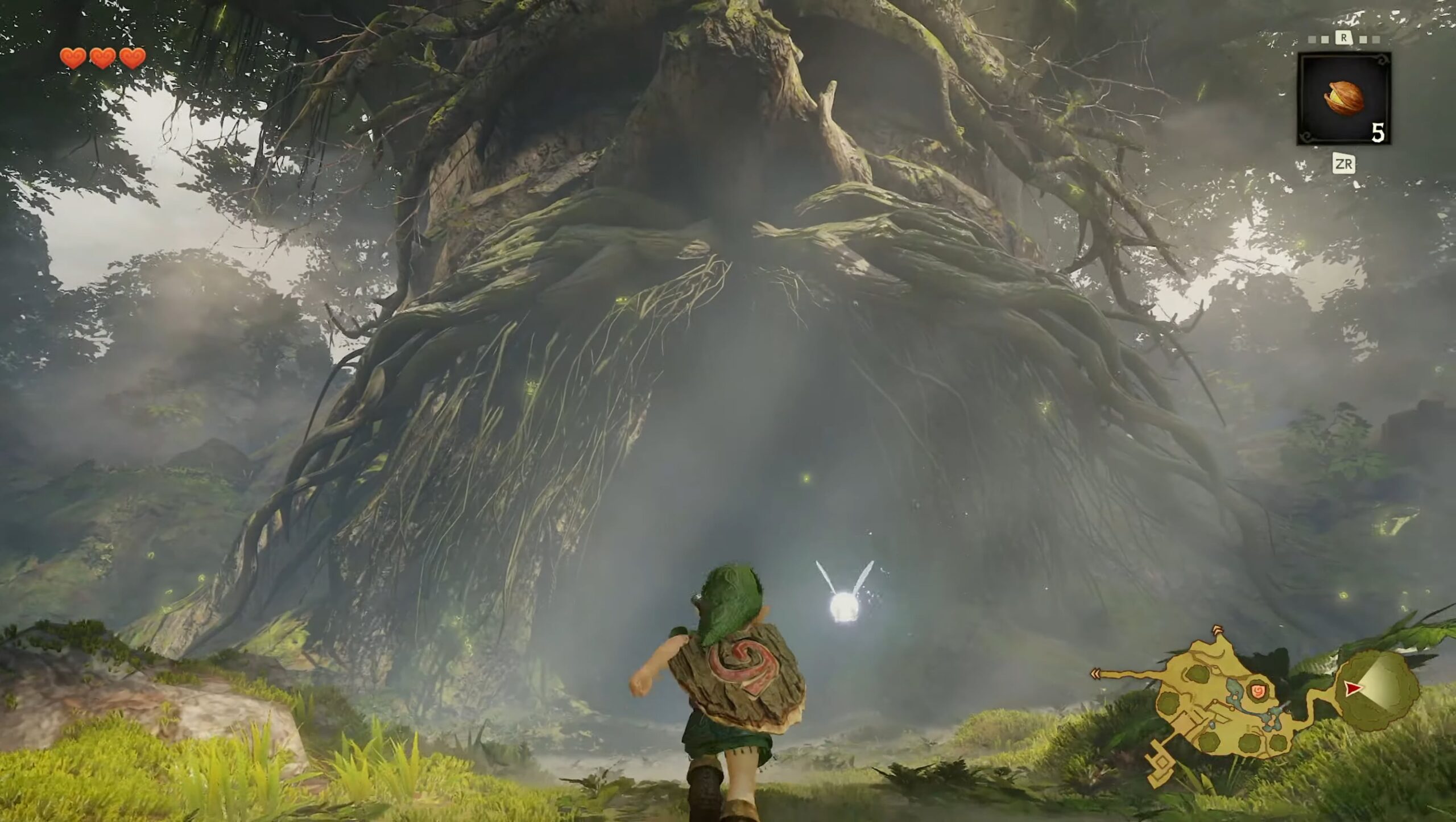
Nintendo has released the first gameplay footage from its remake of The Legend of Zelda: Ocarina of Time and confirmed the Ocarina of Time remake arrives on Nintendo Switch 2 on November 5, 2026. The reveal follows a teaser in June that showed only young Link asleep in his treehouse, without any actual gameplay.
The new footage opens in the Kokiri Forest, where young Link now has a dedicated jump button instead of jumping automatically at the edge of a ledge. His outfit has been redone to look woven from leaves and other forest materials, and Navi still trails him as his fairy companion, flagging enemies and points of interest along the way.
What changes in the Ocarina of Time remake
Link can now aim his slingshot with motion controls or the control stick, adding an option that was not available on Nintendo 64 or in the 2011 Nintendo 3DS remaster. Nintendo has kept the loading screens between certain areas, including the transition from Kokiri Forest to Hyrule Field, saying it wanted to preserve how the original game felt to play.
Hyrule Castle Town no longer locks the camera to fixed angles and can be explored freely. Night can now fall there too, a change from the original, where day-night cycles were limited to specific areas outside the town.
The demo also shows Link entering the Great Deku Tree, the game’s first dungeon. It is the point in the original 1998 release where players first pick up combat and puzzle mechanics that carry through the rest of the adventure, and Nintendo’s footage confirms the structure and sequence of that opening dungeon remain intact in the remake.
A new way to track the story
A menu feature called Threads of Time logs everything Link has done during the adventure, so players do not lose track of where they left off. Story milestones fill in sections of a tapestry as the game progresses. The result is a visual record of how far a save file has come.
Nintendo also added a humming feature: players can hum a tune near their Switch, and if Link has already learned that song on the ocarina, the game plays it back automatically. It gives players an alternative to entering songs manually with a control stick, a method the original game and its 3DS remaster both relied on.
The remake gives players who never owned a Nintendo 64 or 3DS a way to experience a game most commonly cited as a high point of the medium, without the dated camera and control limitations of either earlier version. For longtime fans, the redesigned town, forest, and dungeon sections are a chance to see areas they know from memory rebuilt at a fidelity the 1998 hardware could never support.
Ocarina of Time first launched on Nintendo 64 in 1998 and holds a Metacritic score of 99, the highest of any game tracked on the site. It received one prior remaster, on Nintendo 3DS in 2011, which added touchscreen support and updated controls. The Switch 2 version is the first full visual overhaul of the game since its original release, arriving nearly three decades later.
Nintendo has not announced pricing for the remake or confirmed whether a physical release will accompany the digital version. More details are expected closer to the November 5 launch on Nintendo Switch 2.