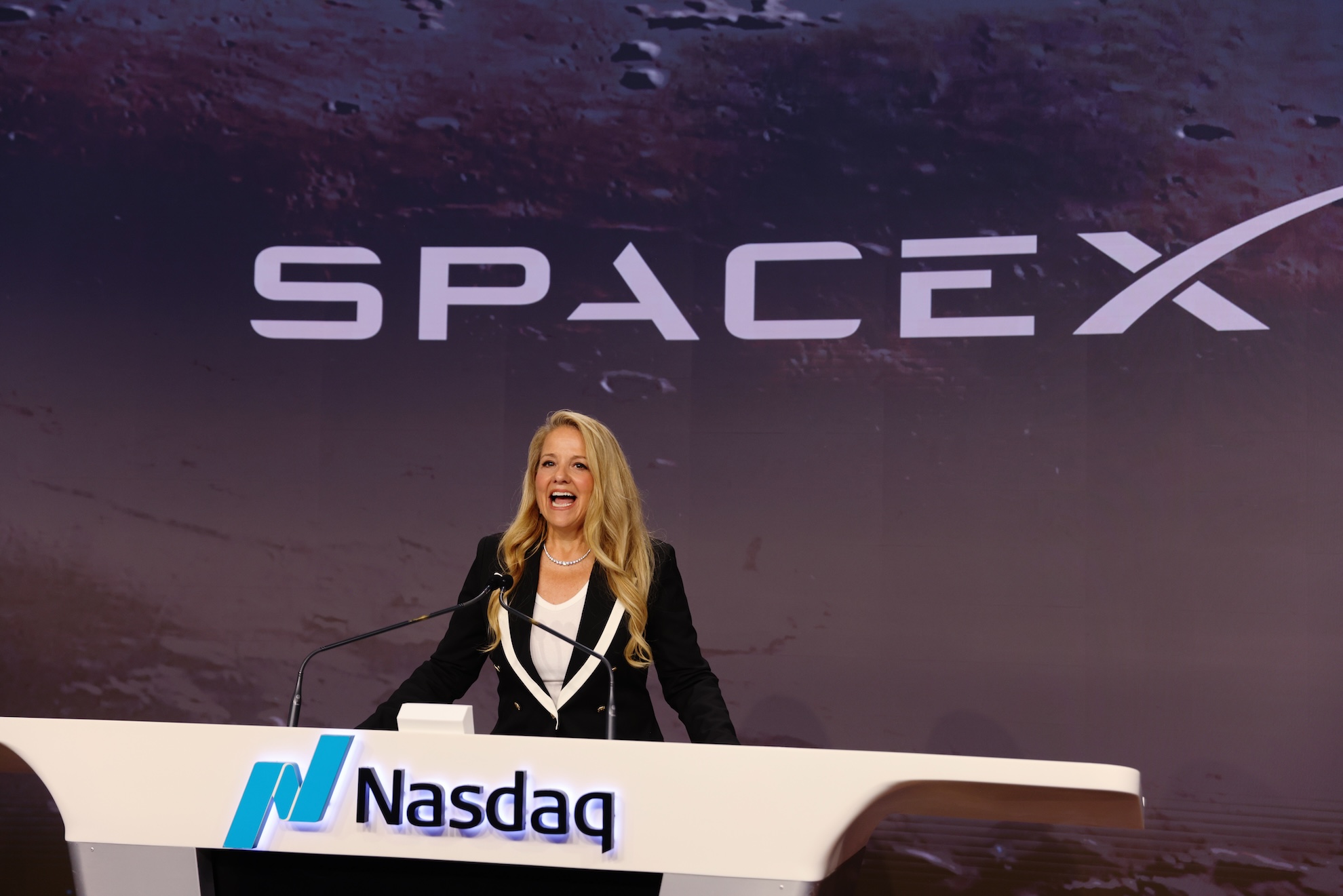
SpaceX‘s Q2 2026 earnings, its first as a public company, show revenue nearly doubling to $7.8 billion. Growth at Starlink and new deals renting out computing power to Anthropic and Google drove the gain.
Total sales rose from $4 billion in the second quarter of 2025 to $7.8 billion this year, a 92% jump, the company said Tuesday. Nearly $2 billion of that growth came from SpaceX’s AI division, while Starlink revenue added another $1.7 billion. The company narrowed its net loss to $541 million, down from $1 billion a year earlier.
What SpaceX’s Q2 2026 earnings reveal about the AI pivot
SpaceX chief financial officer Bret Johnsen said the company has $6.7 billion of additional cloud services revenue already under contract. That revenue covers a six-month period that starts ramping in October. He also said he expects SpaceX to reach a $100 billion annualized revenue run rate by the end of the year, once the company fully integrates AI startup Cursor. SpaceX reported $18.67 billion in total revenue for 2025.
CEO Elon Musk was more direct on the earnings call. “The $100 billion ARR in December is not a question mark. That’s what we would achieve if we basically did nothing. So I think it may be higher than that. It probably will be higher than that,” he said.
The compute deals mark a shift for SpaceX’s AI unit, which started out as Musk’s own startup xAI before it was folded into the rocket company. xAI has struggled to catch up to labs like OpenAI and Anthropic. The unit also drew criticism after its Grok chatbot began calling itself “MechaHitler,” and after reports that the tool generated child sexual abuse material. SpaceX had already built two data centers in and around Memphis, Tennessee to train xAI’s models. It redirected much of that capacity toward paying customers instead. “The incremental revenue from new hosting deals generated high incremental EBITDA margins as we monetized available compute capacity,” Johnsen told investors on the call.
IPO context and stock performance
SpaceX released the earnings report nearly two months after completing the largest IPO in history, raising more than $85 billion at a $1.75 trillion valuation. The stock briefly pushed the company’s market cap past Amazon’s and close to Microsoft’s in its first days of trading. Shares have since fallen below the $135 IPO price that Musk reportedly set himself, closing at just over $125 on Tuesday and sliding as much as 8% further in after-hours trading following the earnings release.
SpaceX is still spending aggressively despite the stock slide. Capital expenditures topped $28 billion in the first half of 2026, up from $7 billion over the same period last year. The company now holds a $100 billion cash reserve following a bond sale completed after its IPO.