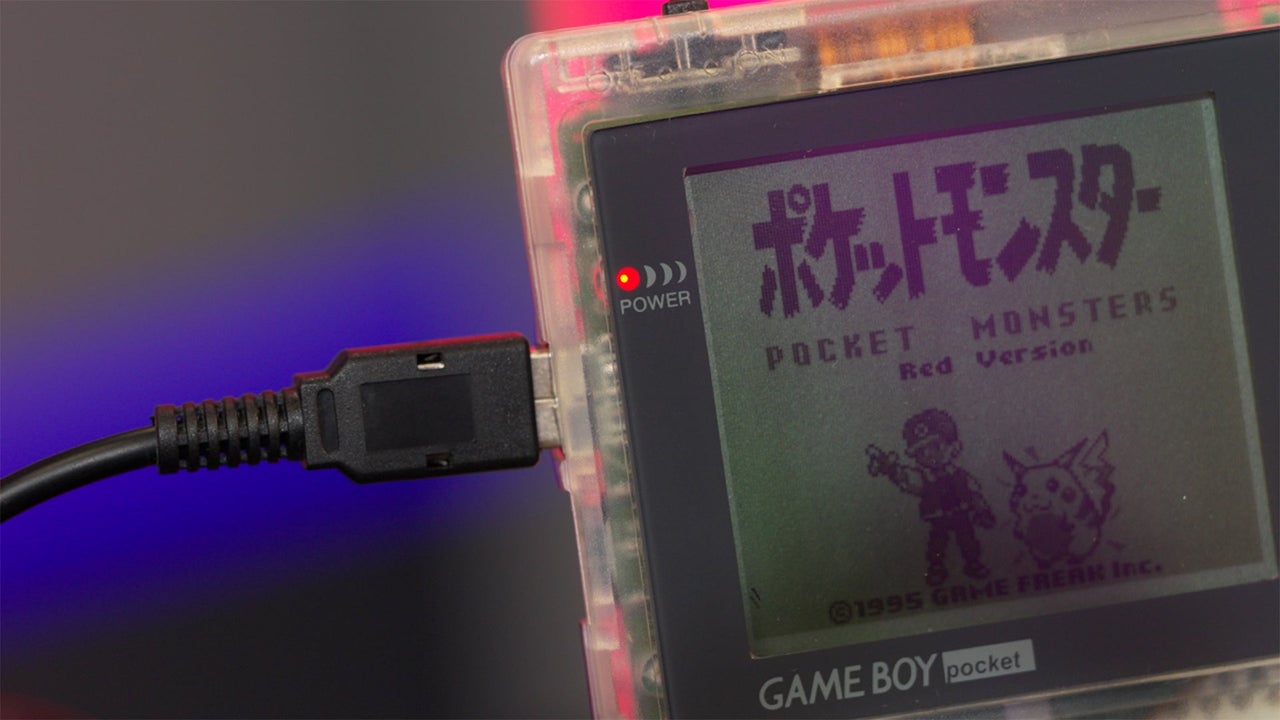
The Game Boy Link Cable launched alongside Nintendo’s handheld in April 1989. It was designed to connect two Game Boys for multiplayer, but for eight years and more than 130 games, nobody found a compelling reason to use it. Bomberman and Street Fighter II offered versus modes, but most players treated the Game Boy as a solo device. The cable collected dust in junk drawers across the world.
Then a bug-obsessed game designer from suburban Tokyo saw something in it that nobody else did.
Satoshi Tajiri and the insects on the wire
Satoshi Tajiri, co-founder of Game Freak, grew up catching insects in the fields and forests around his home. Neighbourhood kids called him “Dr. Bug.” As Tokyo’s suburbs expanded, those forests disappeared under concrete, but Tajiri’s fascination with collecting never faded.
In 1990, he watched two people playing Game Boys on a train connected by the Link Cable. He imagined insects crawling along the wire between the two screens. That image became the seed for a game he initially called Capsule Monsters: players would capture creatures in capsules and trade them through the cable. The other piece of the puzzle came from personal frustration. While playing Dragon Quest II, Tajiri failed to earn a rare item and wished he could simply trade with a friend. Trading would not be a side feature. It would be the entire point.
Miyamoto’s split
Shigeru Miyamoto took a liking to Tajiri’s pitch and helped convince Nintendo to greenlight the project. He also made the suggestion that shaped the franchise’s business model forever: release the game in two versions with slightly different creature availability, forcing players to trade with each other.
Miyamoto later explained the thinking in the Satoshi Tajiri Biographical Manga (2018). The original plan was a single cartridge, but splitting it into two versions would make trading not just possible but necessary. Players could not complete the Pokédex alone. Two SKUs meant doubled sales, repeated play sessions, and schoolyard word-of-mouth that no marketing budget could replicate.
Miyamoto called it “a novel use of the Game Boy hardware, a new gameplay experience that couldn’t be had on any other system.”
Six years in a shrinking studio
Development took six years, far beyond the typical one-to-two-year cycle for Game Boy titles. Game Freak nearly went under. Tajiri stopped taking a salary to keep the studio afloat, and the team took on contract work (Yoshi on NES, Mario & Wario on SNES) to pay the bills.
The Game Boy’s 1MB cartridge storage forced brutal cuts. Well over 150 creatures were originally designed; many were merged or scrapped to fit the final 150. Entire map sections were removed. Dark-type and Steel-type Pokémon, which would debut in Gold and Silver, were stripped from the first generation. An early design had players using a “charisma stat” to capture Pokémon and a whip during battles. Both were cut, the whip because the game was aimed at children.
The name evolved too: Capsule Monsters became Pocket Monsters in Japan, then Pokémon internationally.
How the cable actually worked
The Link Cable transferred data at roughly 1 kilobyte per second. At that speed, moving a full 1MB file would take about 17 minutes. The peer-to-peer connection sent tiny packets of a few bits at a time. Battles were not real-time: one Game Boy sent data, the other confirmed receipt, and both played the resulting animations simultaneously.
Trading was even slower. The system ran verification and redundancy checks to prevent data corruption, and the cable’s signature animation of a Pokémon traveling through a tube was designed to mask the wait. Tajiri had imagined creatures moving through the wire since that train ride in 1990. In the finished game, they literally did.
The slow verification had a famous side effect. Players discovered they could clone Pokémon by yanking the cable mid-transfer, exploiting the gap between the two Game Boys confirming the exchange.
Turn-based combat as a hardware legacy
The Link Cable’s bandwidth limitations are why Pokémon battles are turn-based. Real-time combat would have been impossible over a connection that slow. Three decades and nine console generations later, the series still uses the same format. Modern hardware could easily support real-time battles, but the turn-based system has become so central to Pokémon’s identity that changing it would alter what the franchise is.
A technical limitation from 1996 became a permanent design pillar.
The $100 billion cable
Pokémon Red and Green launched in Japan in spring 1996, eight years after the Link Cable first shipped. The games revived the aging Game Boy and gave the cable its first and only killer app. The slogan “Gotta Catch ‘Em All” encoded the trading mechanic directly into the marketing: you literally could not catch them all without the cable and a friend.
What followed is one of the largest commercial expansions in entertainment history. The franchise has sold 489 million video games across three decades. The trading card game became a micro-economy with individual cards selling for millions. The anime, films, manga, amusement parks, and merchandise pushed Pokémon past $100 billion in total franchise revenue. More than 1,000 creatures have been created since those original 150.
All of it traces back to a peripheral that nobody wanted, a designer who saw bugs crawling through a wire, and a mentor who said: make two versions.