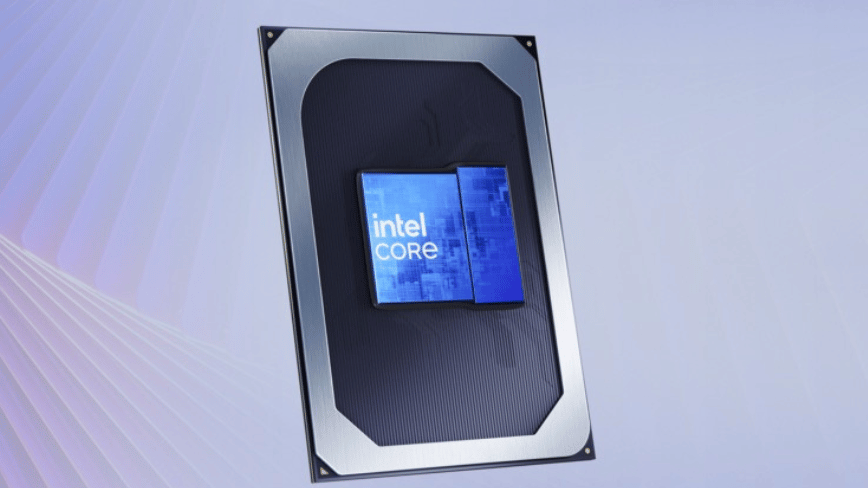
Intel‘s new Core Series 3 processors, codenamed Wildcat Lake, launched April 16 with a clear target: the $599 budget laptop market that Apple‘s MacBook Neo entered just over a month ago. The chips give Windows laptop makers the silicon to compete at a price point Apple has already dominated since its March 11 debut.
The launch is frank about where Wildcat Lake stands. Benchmark comparisons favor Apple, and the MacBook Neo has been selling out for weeks. Intel’s bet is that raw compute scores miss the point in a market shifting toward AI workloads.
What Wildcat Lake delivers
The top-tier Core 7 360 runs six cores: two performance Cougar Cove cores and four efficiency Darkmont cores. Paired with dual Xe3 graphics cores and an NPU5 neural processing unit, the chip delivers 40 TOPS of AI compute — the minimum Microsoft requires for Copilot+ PC certification.
The chip runs at 15W base with a 35W turbo ceiling and supports LPDDR5x memory, Wi-Fi 7, Bluetooth 6.0, and Thunderbolt 4. More than 70 laptop designs from Acer, Asus, HP, Lenovo, and Infinix go on sale immediately or throughout 2026. MSI is the most direct: its Modern 14S and Modern 16S are marketed as MacBook Neo alternatives.
The benchmark gap Intel faces
Apple’s MacBook Neo runs the A18 Pro — the same chip as the iPhone 16 Pro — in a 13-inch Liquid Retina display with 16-hour battery life. In head-to-head tests, Wildcat Lake trails by roughly 44% in single-core performance and 29% in multi-core. The MacBook Neo sold out within weeks of its March 11 launch and doubled its production run to 10 million units.
Intel’s answer to those numbers is to reframe the comparison. In the company’s view, “performance is no longer the only metric that matters” in budget computing. The argument is that traditional benchmarks do not reflect how AI-shaped workloads run on modern chips.
Intel’s AI case for Wildcat Lake
The NPU5 in Wildcat Lake enables local AI inference at a level Intel claims the A18 Pro cannot match without routing tasks through cloud servers. Apple Intelligence handles certain AI workloads on-device, but more demanding requests go through Apple’s private cloud infrastructure. Intel’s position is that Wildcat Lake can run larger language models fully offline.
In practice, this means Copilot+ capabilities — real-time translation, on-device text summarization, AI-assisted photo editing, live voice transcription — run without an internet connection. For the average consumer at $599, whether that matters day-to-day is unclear. For enterprise buyers with data privacy requirements, local inference is a more straightforward selling point.
Several of the 70-plus designs targeting business segments stand to benefit more directly from the on-device AI argument than the consumer models going head-to-head with the MacBook Neo on shelves.
The 18A process node behind the chip
Wildcat Lake is built on Intel’s 18A node, a 1.8-nanometer-class manufacturing process and the most advanced semiconductor production currently running in the United States. The same fabrication line powers Panther Lake, Intel’s higher-end laptop chip targeting the MacBook Pro and MacBook Air tiers.
Panther Lake goes further: 16 cores, 50 NPU TOPS, and a claimed 27-hour battery life. That’s the chip where Intel’s AI argument will face its harder test, competing against a MacBook lineup with years of integration and strong brand loyalty among creative professionals.
Intel’s 18A node also underpins its Terafab foundry partnership, which manufactures chips for Tesla, SpaceX, and xAI. The process is commercially important beyond Intel’s own product lineup. Intel reported $10.3 billion in foundry losses for 2025, so Wildcat Lake does not need to outsell the MacBook Neo, but the 70-plus OEM designs it supports need to generate meaningful revenue.
Two competing bets on what AI laptops mean
The Wildcat Lake launch puts two different product philosophies on the same shelf. Apple builds around efficiency: the A18 Pro handles AI locally where possible, with Apple Intelligence managing overflow through its private cloud. Long battery life and tight hardware-software integration are the primary pitch, and the MacBook Neo does not ask buyers to think about NPU TOPS.
Intel is betting that a dedicated NPU with substantial local inference capacity will become a selling point consumers actually notice as AI applications mature. Copilot+ features are the current examples. The longer-term claim is that software will eventually demand the kind of on-device compute Wildcat Lake provides — and that buyers who chose it early will benefit.
Neither bet has produced a clear outcome. The MacBook Neo sold out, but it launched into a market without direct Windows competition at $599. Wildcat Lake changes that, though 70-plus OEM designs across multiple configurations do not automatically translate to consumer preference over Apple’s offering.
The immediate test is whether MSI’s explicitly named MacBook Neo challengers generate real demand. If Wildcat Lake designs find their footing, the pressure shifts to Panther Lake and whether Intel can sustain the AI argument at the $999-plus tier where the MacBook Air and MacBook Pro dominate. If the MacBook Neo continues to outpace the Windows competition, Intel’s pitch will need to mature alongside the software that is supposed to justify it.