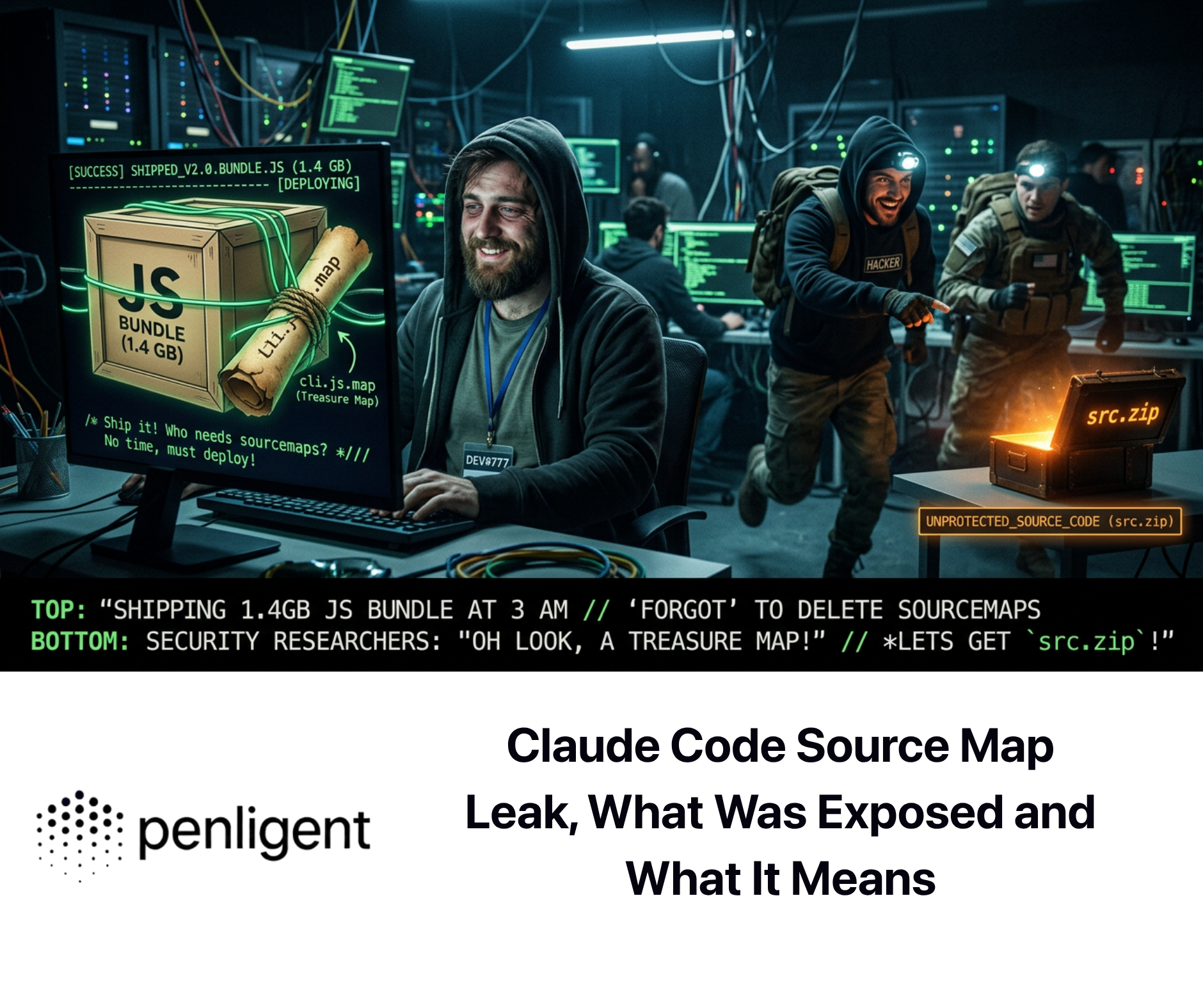
Anthropic’s Claude Code CLI landed in the spotlight after public reports on March 31 revealed a major slip: the npm-distributed CLI for @anthropic-ai/claude-code version 2.1.88 included a source map artifact, making it possible for outsiders to reconstruct readable TypeScript source. Within hours, public GitHub mirrors appeared, claiming to be derived from this exposed file.
This isn’t just a quirky packaging mistake. Source map leaks like this can turn minified, bundled JavaScript back into developer-friendly code, lowering the barrier for bug hunters and attackers. The Claude Code incident is a sharp reminder that even well-resourced AI companies can stumble on basic build hygiene-with ripple effects for trust, security research, and open-source transparency.
The Anatomy of the Claude Code Leak
The leak centers on cli.js.map, a source map artifact tied to @anthropic-ai/claude-code 2.1.88, a real public release dated March 30, 2026. This map was distributed via npm, and public mirrors quickly reconstructed the readable TypeScript source from it. The event is well-documented by public changelogs, GitHub releases, and the appearance of reconstructed repositories almost immediately after the leak.
It’s important to separate fact from hype. There’s no evidence of a breach of Anthropic’s cloud systems, nor any sign that customer repositories, prompts, or local files were exposed. The incident is about a packaging and artifact-exposure failure-serious, but not catastrophic.
Source Maps: Debugging Tool or Security Risk?
Source maps are designed to help developers debug by mapping bundled or minified JavaScript back to the original source. As MDN Web Docs explains, these are structured JSON files that connect transformed code to its unmodified origins. In normal workflows, they’re a convenience. In security, they’re a potential liability.
Generated JavaScript often ends with a sourceMappingURL directive. Tools like Sentry resolve this directive to fetch the map, either relative to the source file or via a direct URL. If a build artifact publishes this pointer and the map is public, anyone can reconstruct the original code. OWASP flags exposed source maps as information leaks because they make code more readable and can reveal hidden routes, internal structure, or even hardcoded secrets.
The risk isn’t always catastrophic. If the map only links line numbers, the impact is limited. But if it contains or points to full source, attackers get a shortcut to understanding and exploiting the code.
How the Packaging Pipeline Failed
The Claude Code leak wasn’t a single slip-it was a chain of missteps. The public story describes a .map file included in the npm distribution and a reachable path on r2.dev. Public mirrors unpacked cli.js.map from the npm package and reconstructed the source from there. This wasn’t just a rogue file upload; it was a breakdown in treating debug artifacts as private rather than public.
Modern build pipelines often automate artifact generation and publishing. If teams don’t explicitly exclude debug files or restrict their access, these artifacts can end up on public CDNs or package registries. Sentry’s own docs recommend uploading source maps privately and gating access with tokens when secrecy matters. Mature tooling expects teams to keep maps secret unless there’s a good reason to share them.
Industry Impact: Not Just an Anthropic Problem
Source map leaks aren’t rare. In 2024, Astro issued an advisory for a similar issue. The core risk is that source maps change the economics for attackers-what was once hard to reverse-engineer becomes trivial. For AI and developer tool vendors, this means tighter scrutiny of build and release processes.
For open-source projects, the line is blurrier. Some teams intentionally ship source maps for transparency and debugging. But for proprietary tools-especially those handling sensitive workflows or enterprise data-leaking readable source is a real risk. It can accelerate vulnerability research, expose internal logic, and erode trust.
What Developers Should Learn
The Claude Code incident is a wake-up call for anyone shipping JavaScript or TypeScript. Treat source maps as sensitive by default. Audit your build pipelines for debug artifacts. Use private uploads for monitoring tools like Sentry, and never assume npm or public CDNs will hide your secrets.
Security isn’t just about patching bugs-it’s about controlling what you ship. The cost of a single artifact leak can be steep, especially as attackers get faster at exploiting public mistakes.
What’s Next: Watching the Supply Chain
The industry is moving toward more automated, reproducible builds-but automation can amplify small mistakes. Expect more scrutiny on how packages are built, what artifacts are published, and how debug tools are integrated. For now, the Claude Code leak stands as a case study in how a single overlooked file can open the door to deeper scrutiny-and maybe, future exploits.