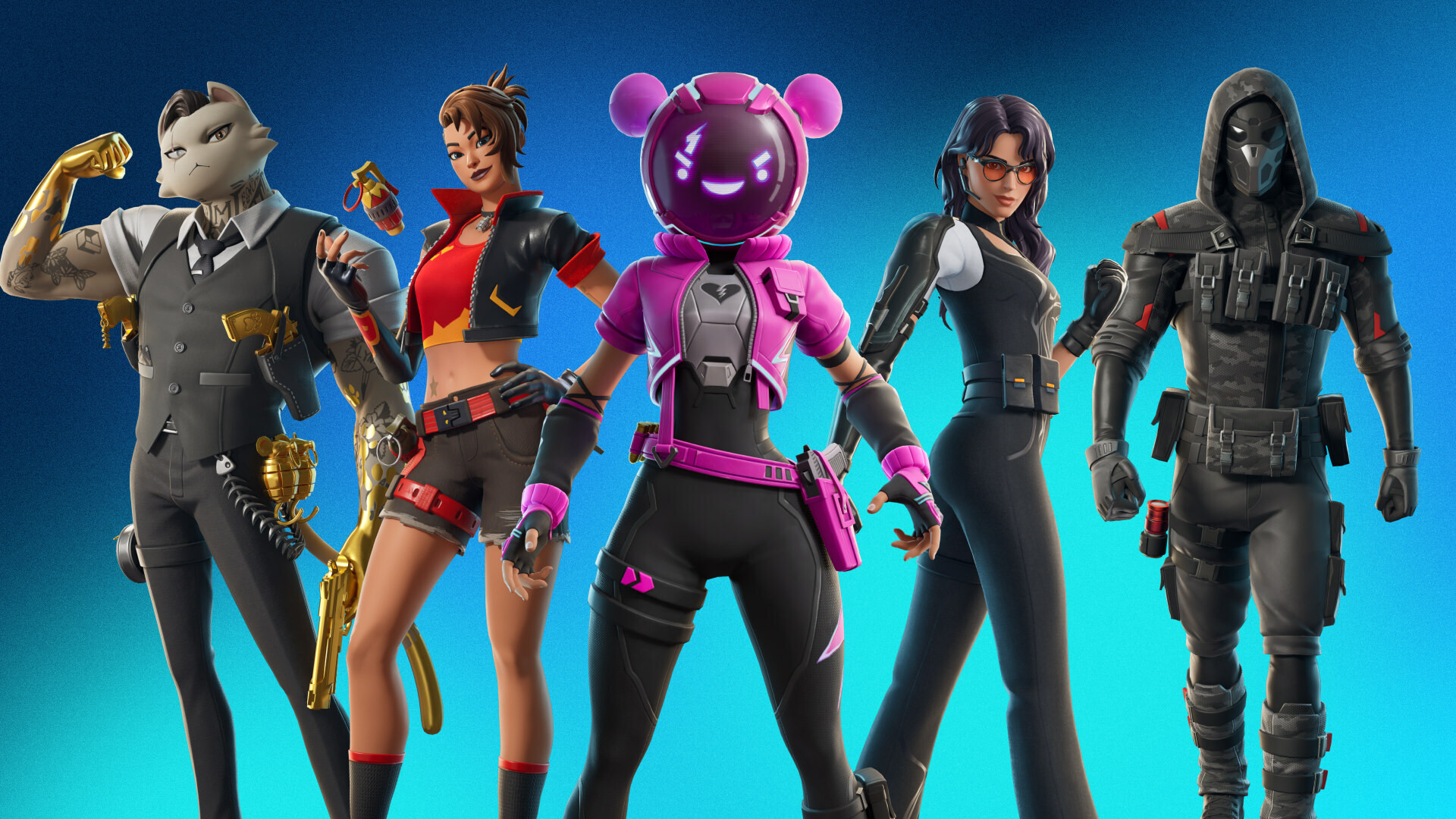
Last verified: April 2026. Player count figures and available game modes may change with seasonal updates.
Fortnite launched in 2017 as a cooperative survival game called Save the World. Within months, Epic Games added a free-to-play battle royale mode that would go on to attract more than 650 million registered accounts. In 2026, Fortnite is no longer a single game. It is a platform hosting battle royale, creative building, racing, and LEGO adventures under one roof.
From survival game to multi-mode platform
Epic Games first announced Fortnite at the Spike Video Game Awards on December 10, 2011. Six years of development followed before the paid early-access release of Fortnite: Save the World in July 2017. The mode put up to four players against waves of AI-controlled husks in a base-building loop.
The turning point came two months later. Inspired by the success of PlayerUnknown’s Battlegrounds, Epic built a 100-player battle royale mode on top of the existing engine. Fortnite Battle Royale launched as a free download on September 26, 2017. It pulled in 10 million players during its first two weeks and crossed 125 million within a year.
Revenue followed the players. By the end of 2018, the game had generated billions through cosmetic microtransactions and the Battle Pass system introduced in December 2017. Epic expanded the platform further with Creative mode on December 6, 2018, giving players tools to design their own maps and game types.
In December 2023, Epic added three new modes in a single update: LEGO Fortnite (a survival-crafting game built with The LEGO Group), Rocket Racing (a racing mode developed by Psyonix), and Fortnite Festival (a rhythm game made with Harmonix). This expansion turned Fortnite from a battle royale into a multi-mode platform.
Every Fortnite game mode available in 2026
Fortnite now includes several distinct modes, though the lineup shifted in early 2026 after Epic announced closures for underperforming titles. Here is what remains active as of April 2026:
| Mode | Type | Players | Status |
|---|---|---|---|
| Battle Royale | PvP shooter | Up to 100 | Active (Chapter 7 Season 2) |
| Blitz Royale | Fast PvP shooter | Up to 32 | Active |
| LEGO Fortnite Odyssey | Survival / crafting | Up to 8 | Active |
| Creative / UEFN | User-generated content | Varies | Active |
| Fortnite Festival | Rhythm game | Varies | Active (Battle Stage closed April 16, 2026) |
| Rocket Racing | Racing | Up to 12 | Closing October 2026 |
| Ballistic | Tactical shooter | 5v5 | Removed April 16, 2026 |
The main draw remains Battle Royale. Chapter 7 Season 1, called Pacific Break, ran from November 29, 2025, through March 19, 2026. Season 2, titled Showdown, launched on March 19, 2026, with a team-based rivalry system that assigns players to either Team Foundation or Team Ice King. The season introduced the skyzip mobility tool and is available on PlayStation 5, PlayStation 4, Xbox Series X/S, Xbox One, Nintendo Switch, Nintendo Switch 2, PC, and mobile devices.
Epic confirmed that Ballistic, a 5v5 tactical shooter, was removed on April 16, 2026. The competitive PvP mode within Fortnite Festival (called Battle Stage) also closed on the same date. Rocket Racing will shut down in October 2026. Epic cited low player engagement across all three modes.
Fortnite player count and revenue in 2026
Fortnite has surpassed 650 million registered accounts worldwide, according to DemandSage. The United States accounts for about 21% of the player base (roughly 108 million accounts), followed by Russia, Brazil, and Poland.
Daily active player counts vary depending on the source and the season. During regular periods in December 2025, the average sat around 1.3 million concurrent players, with peaks reaching 2.73 million, according to DemandSage. Special events push those numbers far higher. During the December 2025 Big Bang event, concurrent players hit 44.7 million, one of the largest real-time online events in gaming history.
Revenue numbers are harder to pin down. Epic Games does not publish annual revenue figures for the game. The last confirmed disclosure placed lifetime gross revenue at $24.8 billion through 2022, with $5.8 billion earned in 2022 alone. Third-party estimates for 2023 through 2025 vary widely, and Epic has not released official numbers for those years.
Income comes from several streams. V-Bucks, the in-game currency, fund purchases of cosmetic skins, emotes, and Battle Passes. The Fortnite Crew subscription costs $11.99 per month and includes the current Battle Pass, 1,000 V-Bucks, and an exclusive cosmetic set. Epic also takes a revenue share from creators who build experiences in Unreal Editor for Fortnite (UEFN).
On March 19, 2026, Epic increased V-Bucks prices. The timing coincided with the Google Play Store return, giving Epic a new revenue channel on Android.
The return to Google Play after six years
On March 19, 2026, Fortnite returned to the Google Play Store globally. The game had been absent since August 2020, when Epic introduced a direct payment option that bypassed Google‘s 30% commission. Google removed the game from the Play Store, and Epic filed an antitrust lawsuit the same day.
The legal battle between Epic and Google went to trial in late 2023. A jury found that Google had operated an illegal monopoly with the Play Store. The settlement that followed required Google to allow alternative payment methods and open the store to competing app marketplaces.
For Android players, this means the game can now be downloaded from the Play Store like any other app. Previously, Android users had to sideload through the Epic Games Store app or Samsung Galaxy Store, a process that required changing device security settings and discouraged many potential downloads.
What you need to run Fortnite on PC
The game runs on Unreal Engine 5.1, which Epic rolled out with the Chapter 4 update in December 2022. The engine upgrade added Nanite (virtualized geometry), Lumen (global illumination), and virtual shadow maps. Visual quality improved, but hardware requirements rose compared to the original Unreal Engine 4 build.
| Component | Minimum | Recommended (60 FPS) |
|---|---|---|
| CPU | Intel i3-3225 / AMD equivalent | Intel i5-11400 / Ryzen 5 3600 |
| GPU | Intel UHD 630 / GTX 960 / RX 460 | GTX 1660 Super / RX 6600 |
| RAM | 8 GB | 16 GB |
| Storage | 40 GB | 40 GB (SSD recommended) |
| OS | Windows 10 (64-bit) | Windows 10/11 (64-bit) |
Beyond PC, the game is available on PlayStation 4, PlayStation 5, Xbox One, Xbox Series X/S, Nintendo Switch, Nintendo Switch 2, Android, and iOS. The iOS version returned in January 2024 after the Digital Markets Act forced Apple to allow third-party app stores in the European Union.
Frequently asked questions
Is Fortnite free to play?
Yes. Battle Royale, LEGO Fortnite, and Creative mode are all free to download and play. The original Save the World mode requires a separate purchase. Revenue comes from optional cosmetic purchases and the Battle Pass, which costs 950 V-Bucks (roughly $7.50 USD) per season.
How many people play Fortnite in 2026?
The game has over 650 million registered accounts. Average daily concurrent players sit around 1.3 million during regular periods. Special events draw far more: the December 2025 Big Bang event peaked at 44.7 million concurrent players.
What Fortnite modes are shutting down?
Epic removed Ballistic (5v5 tactical shooter) and Festival Battle Stage on April 16, 2026. Rocket Racing will close in October 2026. Battle Royale, LEGO Fortnite, Creative, and the core Festival experience continue to operate.
Can you play Fortnite on Android again?
Yes. As of March 19, 2026, the game is back on the Google Play Store worldwide. It had been removed in August 2020 during Epic’s payment dispute with Google. The return followed Google’s antitrust settlement.