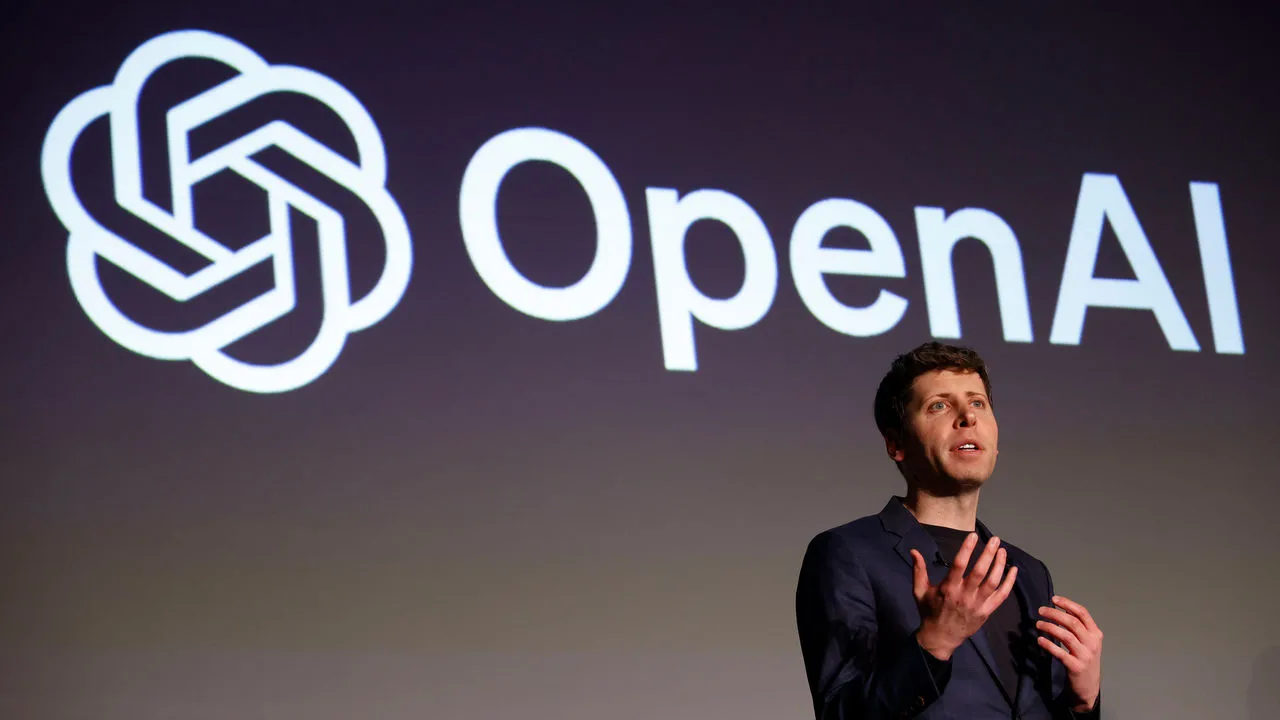
OpenAI CEO Sam Altman and chief scientist Jakub Pachocki have published a note outlining the company’s AGI vision and pushing back against the idea that full automation is the direction OpenAI is heading.
The note, titled “Built to benefit everyone,” lists three stated priorities: building an automated AI researcher, accelerating the global economy, and giving every person on Earth access to a personal AGI. OpenAI released it the same day the company filed confidential paperwork for its initial public offering.
OpenAI’s AGI vision in three goals
Altman and Pachocki argue that AI should improve how people make decisions rather than replace those decisions. Their stated aim is not automation for its own sake, but tools that expand what individuals can accomplish, with AI acting as a collaborator rather than a substitute.
The note’s most concrete timeline: by March 2028, OpenAI estimates a significant portion of its internal research will be conducted by AI systems working alongside human researchers. That automated researcher fulfills two roles in the company’s roadmap. It is both a milestone on the path to AGI and an internal tool OpenAI plans to deploy itself.
Economic acceleration ties the other two goals together. OpenAI argues that AI-driven productivity gains will spread broadly rather than concentrate in the hands of the companies building the technology. The note does not specify how that distribution would work in practice.
What counts as AGI
The note’s commitment to delivering “a personal AGI” for everyone runs into a definitional problem the document does not resolve. OpenAI has not settled on a fixed public definition of AGI, and neither has the broader industry. The note implies that once an “automated AI researcher” is operational, OpenAI will be in a post-AGI environment. That is a narrower framing than some definitions the company has used publicly, and it leaves what a “personal AGI” means for consumers without a clear answer.
The IPO and image context
The timing matters. OpenAI filed confidential IPO paperwork on the same day, which means the “benefiting all of humanity” language lands as a values statement during a period in which the company is actively courting investors.
The note also arrives as OpenAI navigates a reputational issue. Earlier this year, the company took over AI contracts on classified US military networks after Anthropic withdrew, citing restrictions it maintained around domestic mass surveillance and human oversight of decisions involving lethal force. Altman has said the same two restrictions apply to OpenAI’s involvement. However, critics have argued OpenAI applied a softer standard in practice to secure the contracts.
What the note leaves out
The document does not address growing concerns about energy consumption tied to AI infrastructure. Data center expansion connected to model training has drawn scrutiny from policymakers, and the omission is notable given OpenAI’s scale.
The note also arrives shortly after Anthropic published its own document on recursive self-improvement, in which Anthropic described its AI systems as already functioning as internal AI researchers. OpenAI positions that same milestone as a future target, placing the two companies at different claimed points in the same trajectory.