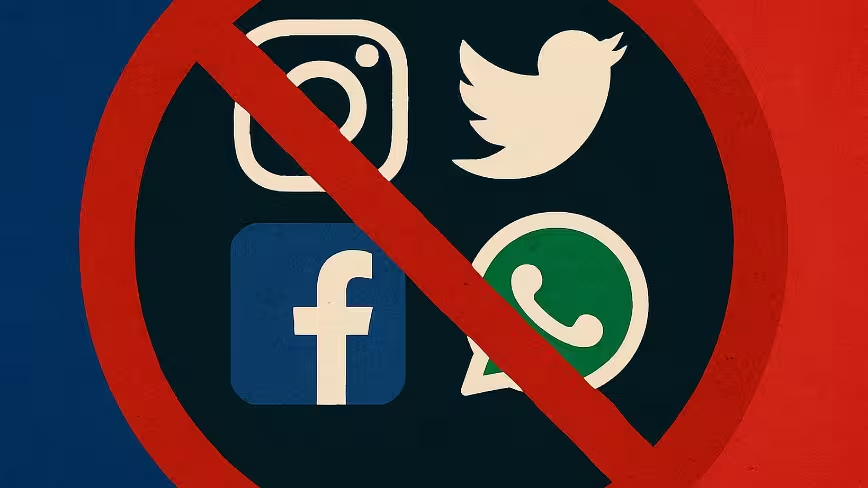
Norway’s minority Labour government announced plans on Friday to introduce a social media ban for children under 16. Platforms, not the children themselves, would be responsible for verifying user ages, and the bill will reach parliament before the end of 2026.
Prime Minister Jonas Gahr Støre tied the proposal to protecting children from algorithmic influence. “We are introducing this legislation because we want a childhood where children get to be children,” he said. “Play, friendships, and everyday life must not be taken over by algorithms and screens. This is an important measure to safeguard children’s digital lives.”
Why the age limit moved from 15 to 16
The announcement raises the threshold from what Norway previously proposed. When the government submitted its social media age limit bill for public consultation in June 2025, the threshold was set at 15. That consultation drew more than 8,000 responses, which Digitalisation Minister Karianne Tung described as a high level of public engagement. After reviewing the feedback, the government raised the limit by one year.
The revised threshold aligns Norway with Australia rather than with the EU’s GDPR minimum age of 13 for data processing consent. Australia became the first country to implement a social media ban for under-16s when its law came into force in December 2025. By February 2026, Australian authorities reported that more than 4.7 million accounts belonging to underage users had been deactivated or removed.
Norway’s social media ban: how age verification would work
Under the proposed legislation, platforms must verify the ages of new users. A social media service is defined as any platform where users can create profiles, connect with others, and share content without editorial oversight. The burden shifts from children self-reporting their age to platforms actively confirming it.
Norway’s existing digital identity infrastructure, BankID, is expected to play a central role in verification. The consultation draft proposed fines of up to NOK 20 million for platforms that do not comply.
What would be exempt
Not all platforms fall within the bill’s scope. Computer games, e-commerce platforms, and closed groups used for educational or sports purposes are expected to be exempt. Digitalisation Minister Tung cited the Norwegian sports coordination app Spond as an example of a purpose-specific platform that would remain outside the law.
The boundary between a social media platform and a gaming community, messaging service, or sports coordination tool remains one of the most contested questions in implementing an age ban.
International context
Norway is not acting alone. Ireland has indicated it is considering a similar approach, and France introduced social media age verification requirements in 2023. The UK’s Online Safety Act, which came into force in stages through 2024 and 2025, imposes strict child protection duties on platforms but stops short of a social media ban.
The EU’s Digital Services Act requires platforms to assess risks to minors but sets no age floor. Norway, as a non-EU but EEA participant, is choosing to go further than the DSA requires. Minister Tung has previously noted that effective age verification “needs Europe to work in step,” given the risk of circumvention through VPNs and cross-border platform access.